Saturday, May 7, 2011

Friday, April 22, 2011
Alt Attribute & SEO Optimization
SEO Optimization images is becoming more and more essential in SEO (Search Engine Optimization) for websites. The ALT attribute is a critical step that is often overlooked. This is often a lost opportunity for better rankings.
In Google's webmaster guidelines, they advise using alternative text for the images in your web site:
Images:. Make use of the alt attribute to supply descriptive text. In addition, we recommend using a human-readable caption and descriptive text round the image.
Why would they ask us to achieve that? The answer is easy, really; search engines like google have a similar problem as blind users. They cannot begin to see the images.
Many webmasters and inexperienced or unethical SEOs abuse using this attribute, trying to stuff it with keywords, hoping to achieve a particular keyword density, which isn't as relevant for rankings now since it was previously.
On the other hand, high keyword density can, on some search engines like google, trigger spam filters, which might create a penalty for the site's ranking. Even without such a penalty, your site's rankings will not benefit from this tactic.
This process also puts persons who use screen readers in a greater disadvantage. Screen readers are software-based tools that actually read aloud the contents of what is displayed on the screen. In browsing the net, the alt features of images are read aloud too.
Imagine listening to a paragraph of text which is followed by repetitions of numerous keywords. The page would be far from accessible, and, to put it mildly, would be found quite annoying.
What exactly is an Alt attribute?
An ALT attribute shouldn't be used like a description or a label for an image, though lots of people use it in that fashion. Although it might seem natural to assume that alternate text is really a label or a description, it's not!
What used within an image's alt attribute should be its text equivalent and convey the same information or serve exactly the same purpose that the image would.
The goal is to provide the same functional information that a visual user would see. The alt attribute text should be the "stand in" when the look is unavailable. Ask yourself this: Should you replace the image using the text, would most users receive the same basic information, and wouldn't it generate the same response?
Some examples:
Some SEO Optimization Tips
If your search button is really a magnifying glass or binoculars its alt text ought to be 'search' or 'find' not 'magnifying glass' or 'binoculars'.
If the image is meant to convey the literal contents of the look, a description is suitable.
If it's meant to convey data, then that data is what is appropriate.
If it's meant to convey using a function, then the function itself is what ought to be used.
Some Alt Attribute Guidelines:
Always add alt attributes to images. Alt is mandatory for accessibility as well as for valid XHTML.
For images that play merely a decorative role in the page, make use of an empty alt (i.e. alt="") or perhaps a CSS background image to ensure that reading browsers don't bother users by uttering such things as "spacer image".
Remember that it is the function from the image we are attempting to convey. For example; any button images should not range from the word "button" in the alt text. They ought to emphasize the action performed through the button.
Alt text should be determined by context. Exactly the same image in a different context may require drastically different alt text.
Try to flow alt text with the rest of the text because that's the way it will be read with adaptive technologies like screen readers. Someone listening to your page should hardly remember that a graphic image is there.
Please keep in mind that using an alt attribute for each image is needed to satisfy the minimum WAI requirements, that are used since the benchmark for accessibility laws in UK and the rest of Europe. Also, they are required to meet "Section 508" accessibility requirements in the US.
It is useful to categorize non-text content into three levels:
Eye-Candy
Mood-Setting
Content and Function
I. Eye-Candy
Eye-Candy are things that serve no purpose other than to create a site visually appealing/attractive and (oftentimes) fulfill the marketing departments. There is no content value (though there might be value to some sighted user).
Never alt-ify eye-candy unless there's something there which will enhance the usability from the site for somebody utilizing a non-visual user agent. Make use of a null alt attribute or background images in CSS for eye-candy.
II. Mood-Setting
This is actually the middle layer of graphics which might actually set the mood or set happens as it were. These graphics aren't direct content and could not be considered essential, but they are important in that they help frame what is going on.
Try to alt-ify the second group as makes sense and it is relevant. There may be times when doing so may be annoying or detrimental to other users. Then try to avoid it.
For example; Alt text that's just like adjacent text is unnecessary, and an irritant to screen reader users. I recommend alt="" or background CSS images in such cases. But sometimes, it's important to get this content in there for those users.
Most times this will depend on context. Exactly the same image in a different context may require drastically different alt text. Obviously, content ought to always be fully available. How you use this case is really a judgment call.
III. Content and Function
This is when the look may be the actual content. Always alt-ify content and functional images. Title and long description attributes can also be so as.
The reason many authors can't understand why their alt text isn't working is that they don't know why the pictures exist. You need to figured out precisely what function a picture serves. Think about what it's concerning the image that's vital that you the page's intended audience.
Every graphic includes a reason for being on that page: since it either improves the theme/ mood/ atmosphere or it is critical to what the page is trying to explain. Understanding what the look is perfect for makes alt text easier to write. And exercise writing them definitely helps.
A method to check the usefulness of alternative text is to imagine reading the page over the telephone to someone. What would you say when encountering a particular image to make the page understandable towards the listener?
Aside from the alt attribute you have a couple more tools available for images.
First, in level of descriptiveness title is within between alt and longdesc. It adds useful information and may add flavor. The title attribute is optionally rendered by the user agent. Remember they're invisible and not shown like a "tooltip" when focus is received through the keyboard. (So much for device independence). So use the title attribute only for advisory information.
Second, the longdesc attribute points towards the Link to a complete description of an image. When the information contained in an image is important towards the meaning of the page (i.e. some important content would be lost if the image was removed), an extended description compared to "alt" attribute can reasonably display should be used. It can provide for rich, expressive documentation of a visual image.
It should be used when alt and title are insufficient to embody the visual qualities of the image. As Clark [1] states, "A longdesc is really a long description of the image...The goal is by using any length of description essential to impart the details of the graphic.
It wouldn't be remiss to hope that a long description conjures a picture - the look - within the mind's eye, an analogy that is true even for the totally blind."
Even though alt attribute is mandatory for web accessibility and for valid (X)HTML, not all images need alternative text, long descriptions, or titles.
Oftentimes, you're better off just going with your gut instinct -- if it's not essential to incorporate it, and when you don't have a strong urge to do it, don't include that longdesc.
However, if it's necessary for the entire page to operate, then you've to include the alt text (or title or longdesc).
What's necessary and what's not depends a lot on the function of your image and it is context about the page.
The same image may require alt text (or title or longdesc) in a single spot, but not in another. If an image provides simply no content or functional information alt="" or background CSS images might be appropriate to make use of. But if the image provides content or adds functional information an alt will be required and maybe a long description would be in order. In many cases this kind of thing is a judgement call.
Image Seo optimization Tips
Listed below are key steps in optimizing images:
Select a logical file name that reinforces the keywords. You should use hyphens in the file name to isolate the keyword, but avoid to exceeding two hyphens. Stay away from underscores like a word separator, such as "brilliant-diamonds.jpg";
Label the file extension. For instance, if the image internet search engine sees a ".jpg" (JPEG) file extension, it's likely to assume the file is a photo, and when it sees a ".gif" (GIF) file extension, it's likely to assume that it is graphic;
Ensure that the text nearby the image that's relevant to that image.
Again, don't lose an excellent chance to help your website with your images in search engines. Begin using these steps to rank better on all of the engines and drive more traffic to your site TODAY.
Thursday, April 21, 2011

Thursday, April 14, 2011
Bench Craft Company on the specialty of jobs
bench craft company
Georgia Bulldogs outfielder Johnathan Taylor has partial paralysis

bench craft company
NBC <b>News</b>, CNBC, MSNBC All Particpating in NBCU's 2011 'Earth Week <b>...</b>
The networks of NBC Universal, including CNBC, MSNBC and NBC News, are all lining up green-themed programming for the 2011 installment of the company's Green is Universal “Earth Week” April 17-24. On “Today” Kathie Lee Gifford and Hoda ...
bench craft company
Great <b>news</b>: Working population percentage drops to three-decade <b>...</b>
Great news: Working population percentage drops to three-decade low.
bench craft company
Apple co-founder Steve Wozniak said in an interview this week that he would consider returning to an active role at the company he helped start if asked.
During an interview in England this week, Wozniak said, "I'd consider it, yeah," when asked whether he would play a more active role if asked, Reuters reports.
Wozniak, Steve Jobs and Ronald Wayne founded Apple Computer in 1976. Wozniak left his full-time role with the company in 1987, but remains an employee and shareholder of Apple.
Since leaving Apple, Wozniak has been involved in a wide range of entrepreneurial and philanthropic endeavors. He currently serves as Chief Scientist for storage company Fusion-io.
Meanwhile, Jobs is currently taking an indefinite leave of absence to focus on his health, though he remains CEO of Apple and continues to be involved in strategic decisions.
Wozniak, who has widely been acknowledged as the technical genius behind Apple's early success, believes that he has a lot to offer the company he helped start, which went on to become the world's second-largest company in terms of market value.
"There's just an awful lot I know about Apple products and competing products that has some relevance, some meaning. They're my own feelings, though," Wozniak said during the interview.
When asked his opinion on Apple today, Wozniak praised the company for its track record with recent products. "Unbelievable," he said, "The products, one after another, quality and hits."
Even so, Wozniak admitted that he'd prefer Apple's devices to be more open, so he can "get in there and add [his] own touches." Last December, Wozniak revealed that he had purchased a DIY kit for the iPhone 4 and "modded" the device into the as-yet-unreleased white version.
"My thinking is that Apple could be more open and not lose sales," said Wozniak, while adding, "I'm sure they're making the right decisions for the right reasons for Apple."
Wozniak has been committed to openness since the beginning. In December, Wozniak told reporters that he didn't design the original Apple I to make a lot of money and had given the designs away for free after his former employer HP showed no interest in the computer.
Apple has reportedly become more aggressive in securing components from overseas suppliers, making moves such as upfront cash payments to both ensure supply and block out competitors.
Analyst Brian White with Ticonderoga Securities said in a note to investors on Thursday that Apple began "aggressively attacking" the component situation in Japan following the earthquake and tsunami that struck the country. The iPhone maker reportedly sent executives to suppliers immediately to ensure adequate supply of components, and also began offering upfront cash payments.
Separately, White's contacts in Taiwan also revealed that Apple is allegedly securing component capacity using what is known as a "three cover guarantee," referring to capacity, stock and price. Apple's move is seen as one that could potentially block out competitors and prevent them from building ample supply of devices.
The information comes as a separate report out of the Far East suggested that a one-month delay for Research in Motion's PlayBook tablet was as a result of Apple securing most of the available touch panel production capacity. The delay has forced the PlayBook to go on sale after Apple's in-demand iPad 2.
Last month, it was said that Apple could agree to price hikes in order to secure touch panel supply, particularly in the aftermath of the Japan earthquake. Apple was said to be in talks with component makers about touch panel pricing, and allegedly considered some price increases in negotiations.
In the company's last quarterly earnings call, Apple Chief Operating Officer Tim Cook revealed that Apple had invested $3.9 billion of its nearly $60 billion in cash reserves in long-term supply contracts. He declined to reveal what components Apple had put its money toward, citing competitive concerns, but said that it was a strategic move that would position the company well in the future.
Analysts largely believe that the secret investment was related to touch panel displays that are the centerpiece of devices like the iPhone and iPad. One cost breakdown estimated that such an investment could secure Apple 136 million iPhone displays, or 60 million iPad touch panels.
It's a move similar to 2005, when Apple inked a major deal with Samsung to secure longterm supply of flash memory. NAND flash would go on to become a major part of Apple's products, including the iPhone, iPad and new MacBook Air.
bench craft company
bench craft company
Kevin’s post and David Glenn’s story are deeply troubling in so many aspects that it’s hard to pick out which ones are the worst. The popularity of the business major, the low work-demands made of students, the quirky assignments and exams . . . they add up to, well, what we get as documented in Academically Adrift. That is, low learning outcomes, little coordination between pedagogy and outcomes, and meager effort on the part of students.
But something else in the story bears highlighting, and it might go to the heart of the problems of the business major. In their analysis of CLA scores for undergraduates, Arum and Rooksa found that business majors score the lowest on writing-and-reasoning skills improvement while in the first two years of college.
A big problem, indeed, when set alongside another statement made by Glenn at the end of the piece: “According to national surveys, [employers] want to hire 22-year-olds who can write coherently, think creatively, and analyze quantitative data.” Note what comes first: the writing. We hear it in just about every survey I’ve seen which asks employers about problems or needs in the workplace. They always emphasize communication skills, particularly writing skills. In sum, businesses need competent writers who draft clear prose. Not PowerPoint slides, spread sheets, or Web sites alone, but prose for reports, correspondence, agreements, white papers, etc. Not collaborative composition only, but solitary composition, too.
That’s the reality, but in Glenn’s story, I found only one case in which the examination of writing quality was emphasized, the University of Viriginia’s business school.
Why doesn’t it come up all the time?
Obviously, because writing is a labor-intensive activity for student and for professor. Assign each student a 15-page white paper on some subject or another and the workload for everyone rises considerably. For the student, it means paying attention to punctuation, diction, transitions, and structure, not to mention pursuing one line of thought through 3,000 words. For the professor, it means grading punctuation, diction, transitions, and structure, not to mention one line of thought through 3,000 words.
It is precisely the kind of training that business majors need and employers prefer, but it looks just too darn onerous for students and for teachers. Even if students end up on the job writing more PowerPoints than long papers, the training in prose composition in school pays off.
We should guard against an assumption cited in the article that what people will do in the workplace should be replicated in the classroom. This is to align training and the thing you will eventually do too closely. Students should write papers that are longer than the things they will have to write in the workplace. They should spend more time alone than they will in the workplace. Training should always require practices that exceed the tasks that need to be handled later on.
If business school leaders wish to improve learning outcomes and raise the workplace readiness of graduates, they have a simple option: require a year-long composition course at the beginning of the major. That course should focus on prose and should minimize collaborative work.
One important thing about cities is their sex appeal — their magnetism. Places flourish when they attract people, resources, opportunities, and ideas, and match them to one another. Cities are much more than the built environment of roads and real estate. Cities are about relationships, and whether people have access to opportunities. Cities are one big dating game.
When cities lose their magnetism, the whole population suffers. The deterioration of Detroit began well before recent auto industry woes; its population plunge was confirmed by the latest Census. Some attribute decline to bad urban redevelopment schemes or corrupt politics that failed to improve schools or reduce crime. "A once-great American city today repels people of talent and ambition," a Wall Street Journal columnist wrote recently. A local leader told him, "It's been class warfare on steroids, and ... so many Detroiters who had the means — black and white — have fled the city."
Cleveland is another shrunken city with significant poverty. In the 1980s, Cleveland Tomorrow, a coalition of major company CEOs, sponsored downtown projects, including a new baseball stadium and the Rock and Roll Hall of Fame. This attracted luxury apartment developments, luring the affluent to the center city and revitalizing it. But inner city ghettoes were barely touched, and the region continued to lose high-wage manufacturing.
There's a tale of two cities within many city borders: one rich, the other very poor. Dubai, a gleaming new city of luxury high rises, is ringed by hidden slums for temporary service workers from the underclass of Asian nations. In New York, the middle class, including young families, cannot afford to live in the city. Baton Rouge has affluent areas with some of Louisiana's best quality-of-life indicators and extreme poverty areas with some of the worst. Other divides include racial and ethnic enclaves that vary in opportunities — for example, minority entrepreneurs with promising business ideas who can't access mainstream sources of capital and support.
Cities should be connectors but can have connection problems. Cities are where all parts of life come together: jobs, health, education, environmental quality. Yet, in most cities, businesses, schools, hospitals, and city services still operate in silos. And the political boundaries of cities don't encompass their true extent or the flow of people, as the Brookings' Metropolitan Policy Center points out. IBM's Smarter Cities Challenge supports efforts to use technology for connected regional solutions.
Interdependence among urban issues makes vicious cycles worse. If there is no action on high youth unemployment or poor educational quality and high school dropout rates, then too many African-American males end up in prison. High crime rates make sections of cities undesirable, and neighborhoods deteriorate. Aging buildings and toxic environments then cause health problems, such as lead poisoning or asthma, which disproportionately affect inner city children. Children in poor health have trouble learning, learning problems are associated with school dropouts, and vicious cycles continue.
Pivotal investments can start virtuous cycles. The transformation of Miami from sleepy southern city to international trade hub and informal capital of Latin America was propelled by investments in a world class airport and a flood of immigrants from Fidel Castro's Cuba. Mayors and civic leaders took advantage of this to attract new businesses and tout Latin connections, as my book World Class describes. But progress stalls if benefits don't reach the grass roots, racial divides persist, and major institutions fail to collaborate. The Miami Foundation's emerging leaders program is designed to deploy diverse younger professionals for major civic projects.
Revitalizing cities requires national urban policy investments and social innovations on the ground. Leadership might come from:
- Enlightened mayors who build public-private partnerships or join Cities of Service, which align the city and non-profits around high-impact goals.
- Business leaders, such as former Miami Herald publisher David Lawrence, who rallied Miami-Dade County to vote for a tax increase (Yes to new taxes!) to create the Children's Trust, a fund to improve life for all children.
- Faith communities, such as Rev. Raymond Jetson's community organizing toward a coalition for "A Better Baton Rouge."
- Financiers, such as Tim Ferguson and Ron Walker, who co-founded Next Street to invest in inner city businesses.
- Social entrepreneurs, such as Hubie Jones, who wants to replicate a birth-to-college educational model like the Harlem Children's Zone in Boston.
- Community foundations with a strategic perspective, seeking integrated solutions across issues such as youth employment, education, health, and green plans.
The best social innovations will connect people and institutions, producing an infrastructure for collaboration. That social infrastructure will increase the sex appeal of cities by going beyond initial attraction to build lasting relationships for lasting improvements.
bench craft company
Taptu allows iPad owners to “DJ your <b>news</b>” | VentureBeat
Anthony is a senior editor at VentureBeat, as well as its reporter on media, advertising, and social networks. Before joining ...
bench craft company
Taptu allows iPad owners to “DJ your <b>news</b>” | VentureBeat
Anthony is a senior editor at VentureBeat, as well as its reporter on media, advertising, and social networks. Before joining ...
Tuesday, April 12, 2011
Roofing Companies Vancouver - 5 Inquiries to Ask yourself
Roofing Vancouver - Frequently Asked Questions
1. Repair or Replace?
There's no opinion like an expert opinion. Most contractors provides you with a totally free estimate. Get a list of a couple trusted contractors and phone them well ahead of time of when you wish to obtain your roof fixed to help you compare costs and opinions.
2. Beauty versus Practicality?
Discuss this with your spouse or partner. (The kids could care less...at least the young ones.) The fact is, nobody wants an ugly roof just like nobody wants to be seen with bed hair. If you've got a good quality roof and you just need to do the repair, it's worthwhile to pay for the cost of the initial shingle instead of doing patchwork. A roof replacement doesn't happen frequently (we hope!) and thus make a decision that suits you and your loved ones well or it'll stand out just like a sore thumb everyday you go home.
3. Must i replace the rooftop so I can sell the home for additional?
Consider this cautiously before making a choice. Depending on the roofing material you select, a brand new roof lasts between twenty, fifty, to one-hundred years! This means you have to look into the year of the roof that's currently too deep first. Are you at year 18 of the 20-year warranted roof or year 30 of the 50-year warranted roof? Obviously, the quality is the reason why the roof keep going longer, but if you're not planning to remain in your current home throughout your life, the higher expense may not be worth your investment. Although a brand new roof can enhance the worth of your selling price, the increase might not be enough to pay for neglect the and that's bound to hurt your wallet.
4. Could it be a good idea that i can repair the roof myself?
Sure it is. Before you need to do, consult an expert first. You can perform it yourself, however, you shouldn't be a complete ‘lone ranger.' Depending on the extent of your repair, you may or might not convince you. In either case, it will help to obtain a professional eye on the problem first and perhaps a free quote so you can do the math later and find out if it's truly worth your time, sweat, and money to be mister or miss fix-it.
5. When is a good time to get the roof replaced?
Weather may cause delays from days to weeks. Most people plan ahead to have their roof replaced in the summer when they have a friend will be home during the day for any solid fourteen days. Once you have this era in your mind, create a call to some trusted contractor months ahead of time to get a quote. Some companies get booked up fast and odds are, they're the most reputable. Preparing in advance from the summer also gives you time for you to discuss with more and compare costs...especially if you need to possess the roof done by a specified date.
The very best Roofing Company In Vancouver!
It is possible to leak in your home's roof? Have you lost shingles or tiles in a storm? Have overhanging branches caused damage? Is your roof a lot more than 20 years old and showing wear and tear? Are your gutters overwhelmed and draining poorly?
When the response to these questions is "Yes" it's time to call the top roofing contractor Vancouver - Crown Roofing & Drainage.
For more than a century Crown Roofing has been the roofer of choice among our Vancouver neighbors. We offer complete roofing services, from emergency repairs and roof restoration, to accomplish roof replacement. All while using finest quality materials, installed with precision and also the highest level of customer support.
YOUR Vancouver ROOF DESERVES NO LESS!
The rooftop of the Vancouver house is the first type of defence against wind, rain, snow, ice along with other weather conditions. Be sure it is up to the task. Among Vancouver Roofing companies, only Crown Roofing has got the depth of experience and successful track record to make sure your roofing system will be properly designed and installed.
NEIGHBORS HELPING NEIGHBORS.
One reason Crown Roofing has been the most successful roofing contractor in Vancouver is our commitment to our neighbors. We treat your house as though it were our own and we were creating a roof to protect our very own family. That's what neighbors do, and you will count on Crown Roofing being here to support you and back our work. In the end, we've been repairing and replacing roofs in Vancouver since 1902!
Obtain a FREE INSPECTION AND EVALUATION OF YOUR Vancouver ROOF.
Visit the Roofers Vancouver for any FREE inspection and evaluation of the roof. Give you the best roof for your Vancouver home, at the best value. We build roofs to last!
Monday, April 11, 2011
Tacoma Roofing contractor: Help your house be Beautiful
Not many people understand the value of a good roof, but your knowledgeable Tacoma Roofing contractor does. From top notch experience, they will be able to let you know why you need a strong, secure, and leak-free roof in your home.
The local Tacoma Roofing company is well aware how important a financial investment your property is for you, especially as it is a long term one. Your house might have been damaged slowly over the years and also you need to take steps to reduce this damage. For a number of people, keeping their property beautiful is also a few pride. You will find those too who'd like to turn their house into a cost effective and efficient living place. Your homes roof is a valuable part of your property and plays a role in each one of the aspects mentioned previously. For this reason, you need to employ the services of qualified a Tacoma Roofer.
Kinds of Roofs installed by a Tacoma Roofer
Among the more common kinds of roofs are asphalt shingles, steel or metal sheeting, fiberglass, slate and terra cotta tiles.
Each type of roof invites distinct problems, however they can be easily taken care of by a trusted Tacoma Roofing company. It's vital that you nip roof problems within the bud before they become too costly or dangerous. You can schedule an appointment using the Tacoma Roofing company to consider a glance at your roof to see if you will find any issues or potential problems with it. If you will find, they may be in a position to tell you how to approach them.
A Tacoma Roofer Helps to Build Strong Homes
The exteriors associated with a house, primarily the rooftop and gutters, face the onslaught of bitter and varying weather conditions, day after day. Painting, repairing, and cleaning gutters might be necessary. In some cases you may have to replace them completely. Usually, whenever your gutters show signs and symptoms of trouble, your roof also needs to be inspected for problems. Whatever issues there might be, an experienced Tacoma Roofing contractor can examine them in detail and suggest the remedy.
In case your gutters tend to clog too often, or there are leaks along the walls of your home, it may imply that there is debris piled-up on the roof. Loose branches, piles of leaves, along with other light objects which are swept on your roof throughout a storm can all contribute towards damaging your roof, and these damages can be lasting. A knowledgeable Tacoma Roofing contractor will tell you that birds, mice, along with other types of rodents often build nest in the debris that collects on the roof. While these nests may look rather innocent, they are great at collecting moisture, which can lead to loose shingles, mold, and indoor leaks in your home. Additionally, this may also cause vermin infestation. Following a storm, your Tacoma Roofer will claim that you inspect your homes roof for just about any signs of debris or damage.
Reverse Damages with the Help of a Tacoma Roofer
However high quality the roof may be, it is going to wear down over time. You will find shingles that are known as "25 year" or "30 year" shingles, but those numbers are just related to warranty made by the manufacturers. They hardly ever require that long. Realistically speaking, "25 year" shingles will not last more than fifteen to twenty years. In an area that's prone to storms, shingles or the entire roof may need to be replaced every ten years. With a Tacoma Roofing company, the cost is going to be less than what you believe.
If there you lose any shingles, or there is some harm to them, a Tacoma Roofing company will be able to assist you to. Damaged shingles can lead to indoor leaks, as the substrate from the roof becomes subjected to the elements. Shingles which are loose or broken can slip off and pose a potential hazard to individuals standing below. Missing shingles produce a gap that allows rain, wind, ice, and debris to build up under the adjoining shingles, which creates a "domino effect" that affects other shingles and they become loose or broken. A comprehensive investigation is going to be produced by the local Tacoma Roofer, should you call them up with your suspicions of loose or missing shingles.
Your Tacoma Roofing contractor will be in a situation to tell you what are the smartest choice is for your roof. If your roof isn't inside a good shape, it is advised you have it replaced completely. The Tacoma Roofer may take you through the different roofing possibilities to you that will fit your requirements as well as your budget.
Tacoma Roofer: Enhancing your Home's Efficiency
Your homes roof shelters you against storms, sleet, and hail. By giving adequate ventilation, your roof protects your house from overheating, by holding in the heat, it keeps your house warm. That's why you need to prepare your roof from indoors as well as outdoors for any sort of weather emergency. A Qualified Tacoma Roofer can provide help in this case.
First of all, inspect your homes roof thoroughly for any and all kind of damage, before the beginning of a new season. The gutters should be clear, debris shouldn't be piled on or trapped under shingles, tthere shouldn't be homes of squirrels or birds within the eaves or attic, and also the roof should be structurally sound. For that last part, you'll need the help of your local Tacoma Roofing contractor. It may be quite dangerous to climb to the roof of your property. This is where the contractor from Tacoma Roofer comes in. He'll read the strength and security of the roof and shingles, and perform a general inspection of the entire roof structure, to make sure that it's in proper working order. They will be in a position to point towards issues that you need to keep close track of and problems you may not have spotted.
You'll need all the assist you to can get in the Tacoma Roofing company. You can help your homes roof by installing a gutter guard or leaf cover to help prevent debris from forming inside your gutters. The extra weight of debris prevents the gutters from draining and may even tear them down. Check the fasteners in your gutters and when they are loose, tighten them. Do something to change worn screws and brackets. For those who have a chimney in your house, inspect the bricks and mortar signs and symptoms of wear. A reliable mason could be recommended because of your Tacoma Roofing company, if there are any repairs to become done.
Tacoma Roofing company: Someone You Can Count On
When you know or suspect that there's a problem, your Tacoma Roofer ought to be contacted. They are able to use their knowledge and expertise to obtain your house back in ace condition by simply working on the roof. Your roof deserves attention. So give them a call today, to enable them to get down to caring for your roof.
Sunday, April 10, 2011
What is Distinction between Commercial Roofing Companies From Residential Roofing Companies
If you are considering getting a roofing company to re roof your house or building then you can be wondering what are the differences are between residential roofing companies and commercial roofing companies. To start with, the one big difference is that often times an industrial roofing company might have signed an agreement with and be obligated to some roofing union in able to work on union commercial jobs.
If this sounds like the situation then their labor costs will prohibit them from working on non union residential jobs. Beyond that, if a commercial roofing company hasn't signed an agreement with a union they might be outfitted simply for commercial jobs which of course means their workers and equipment might not be in line with smaller residential jobs.
Residential roofing contractors generally often run smaller companies and hence, are more capable of bid competitively on residential jobs, which tend to be small compared to comercial jobs. In fact, quite often residential roofing contractors will run one man operations, in which the contractor that you simply talk to may be the one that actually does the job about the building.
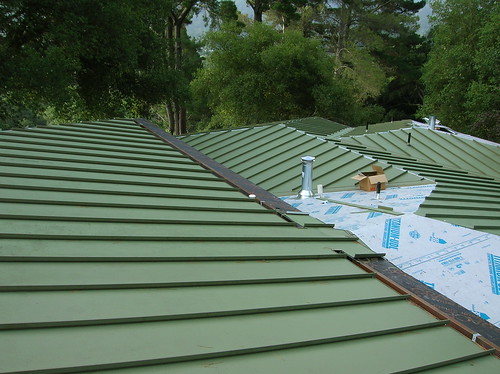
Also, liability insurance for commercial roofing is more epensive and a larger bond is needed for any commercial roofing work which will make it not economical for a commercial roofer to do residential roofing jobs.
Still an additional factor is the fact that commercial jobs can run on tighter time frame for any quantity of reasons, requiring an industrial contractor to employ a larger crew or crews which again makes smaller jobs not as profitable for them.
Distinction between Commercial Roofing and Residential Roofing
Are you aware that the rooftop of the house or building has a huge effect on the entire structure itself? Damage caused to roofs because of natural or other disasters causes a considerable loss of property everywhere. The type of materials accustomed to construct the rooftop which should be sturdy and long lasting, the way where the roof has been installed and even its timely maintenance are extremely crucial. There are two kinds of roofs which are utilized on all the buildings that people see around us: commercial and residential. Even though it may seem that commercial roofing is performed only for businesses or offices and residential roofing is performed for apartments and houses, in reality the differences are much more complex than that.
Residential roofing is generally completed just by one hired contractor but commercial roofing usually takes a whole team to complete the job. The reason being a commercial roof is commonly larger in terms of sq ft than a residential roof.
Commercial roofs need to be made carefully keeping the character and purpose of the building in mind. For example, when there is a cafe or restaurant within the building then external components like ventilation systems, smoke stacks and pipes is going to be required. Residential roofs tend not to have such components other than a chimney or two at most.
Commercial roofs tends to be flat in design to support further changes in a later period, whereas most residential roofs have peaks along with other architectural features like roof gardens.
Commercial roofing is much more expensive than residential roofing because of the special tools, materials and safety equipment that are needed onsite. Usually the patching or maintenance work is completed in segments unlike for any residential roof in which the repair or replacement work could be completed in a short time. This really is another reason why the equipment employed for residential roofs is often smaller and less costly too.
Commercial roof installations have a extended period to accomplish compared to residential roof installations and are usually constructed in large sections. During this phase however, you should make sure that there are no leakages, cracks or any other visible wear and tear signs as it can certainly cause considerable damage to the whole building.
You should install the best roof for any building depending on its purpose. Ensure that you hire a construction company that utilizes top notch materials and has the best equipment to do the job or neglect the risk turning out to be a huge loss later.
Subscribe to:
Posts (Atom)